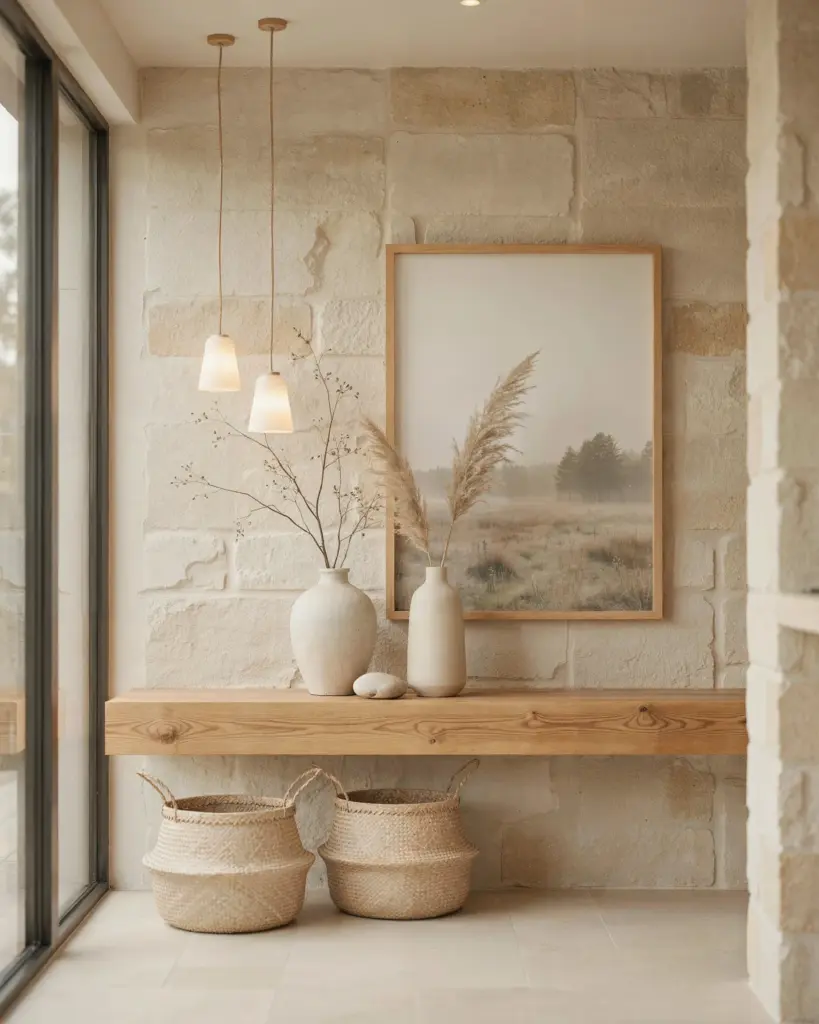
If you love the look of natural wood home decor but worry your living room will end up looking like a log cabin or a cluttered flea market, you are not alone. I have made plenty of mistakes trying to bring warm organic accents into my own space, and I learned that the secret is not about buying more wood pieces but about choosing the right ones and placing them with intention. The most common pitfalls fall into a few predictable categories, and once you know what they are, you can create a cozy, grounded room that feels curated rather than chaotic.
Mistaking Quantity for Quality: How to Avoid Overdoing Rustic Wood Accents
One of the biggest mistakes I see with rustic wood accents is buying too many chunky, distressed pieces at once. A single large live-edge coffee table can anchor a room, but three mismatched reclaimed shelves with iron brackets, a log side table, and a barn-wood TV console all competing for attention will feel heavy and dated.
Instead, choose one or two statement pieces and let them breathe. A good rule is to limit heavily textured rustic wood to no more than three items in a standard living room, and make sure they share a similar finish or wood species. If you love the farmhouse look, pick a reclaimed beam mantel as the hero and keep the rest of the wood accents simpler, like smooth walnut picture frames or a sleek plywood media console.
- Pick one focal point. A live-edge coffee table or a reclaimed wood accent wall works best as the star.
- Balance with smooth surfaces. Pair rough-hewn pieces with lacquered or satin-finished wood to avoid visual noise.
- Edit ruthlessly. If you have three different wood tones in one room, mix in painted or upholstered items to break them up.
Ignoring Scale and Proportion: The Biggest Mistake with Wooden Interior Ideas
Another common error is choosing wood furniture that is either too large or too small for the space. I once bought a thick, heavy dining table for a narrow living room, and it turned the whole area into a hallway. Wooden interior ideas often look best when proportions are considered first. A delicate, mid-century walnut sideboard with tapered legs will make a small room feel airy, while a massive chunky oak cabinet can overwhelm a cozy corner.
Before you buy any natural wood piece, measure the floor plan and visualize how it sits next to your sofa, rug, and coffee table. Leave at least 18 inches of walking space around large items. For wall-mounted shelves or picture frames, group them in odd numbers and keep the visual weight balanced. A single large floating shelf above the sofa can feel more intentional than a dozen tiny scattered frames.
Forgetting the Rest of the Palette: Balancing Organic Wood Decor with Neutral Tones
Organic wood decor shines when it is set against a subtle backdrop, but many people forget to consider the wall color and soft furnishings. If your walls are a warm beige and your sofa is tan, adding golden oak shelves can make the whole room look muddy. The trick is to create contrast using a clean neutral palette. Soft whites, greiges, and light sage greens let wood grain stand out without competing.
For a foolproof combo, use a white or warm white wall with a pale linen sofa, then bring in two to three organic wood decor pieces in varied tones. A dark walnut coffee table, a lighter acacia side table, and a single birch log vase create depth without chaos. If you have existing warm-toned walls, choose wood with cool undertones like ash or bleached oak to balance the room.
Skipping Sustainability: Why Your Wood Choice Matters for Eco-Friendly Decor
It is easy to grab a cheap pine shelf from a big box store, but that shortcut often leads to a room that feels disposable rather than grounded. Sustainable home decor is not just a buzzword; it affects how your space ages and how it connects to the natural world. When you buy fast-furniture wood that warps or chips, you end up replacing it within a year, creating waste and frustration.
Look for FSC-certified woods, reclaimed lumber, or locally sourced pieces. Even small choices matter, such as choosing a bamboo frame over a plastic one or supporting a local woodworker who uses offcuts. I have found that sustainably sourced wood often has a richer grain and a more stable finish, which means your room will look better for longer. If you are on a budget, check secondhand shops or salvage yards for solid wood furniture that can be sanded and refinished.
Mixing Wood Tones Wrong: A Common Mistake in Natural Wood Home Decor
Perhaps the most frequent question I get about natural wood home decor is whether you can mix different wood tones.
#naturalwoodhomedecor #organicwooddecor #rusticwoodaccents #sustainablehomedecor #woodeninteriorideas