The One Look Everyone Tries to Copy (and Where They Get It Wrong)
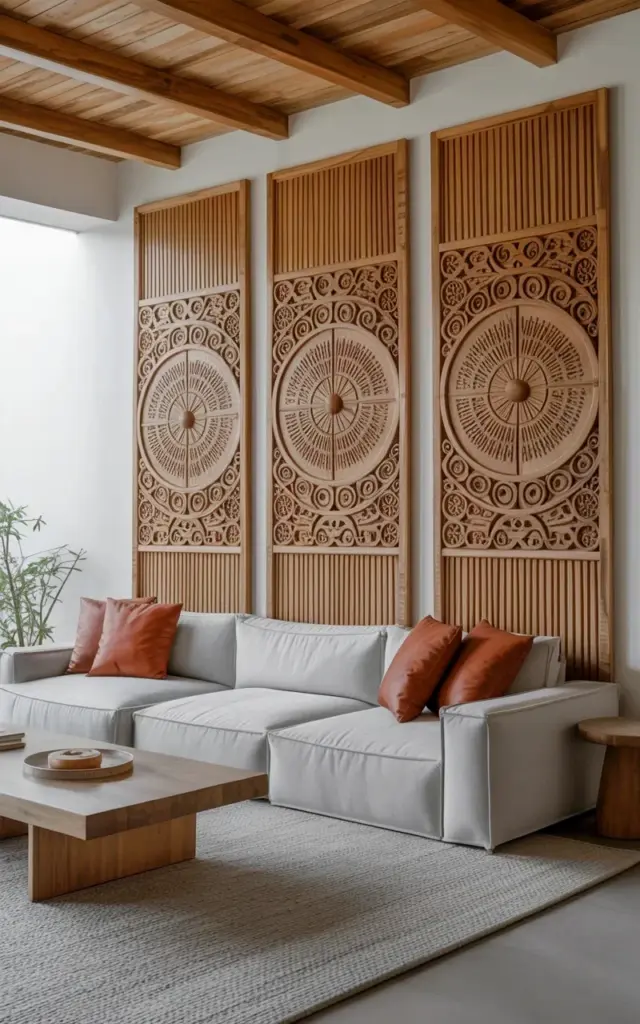
You’ve seen the photos. A light gray sectional sits against a white wall, and three massive carved wood accent wall panels transform the whole room with their circular patterns and vertical striations. Warm terracotta pillows soften the crisp lines, and exposed wooden beams tie everything together. It looks effortless. But when you try to pull it off at home, something always feels off. The panels overwhelm the space. The coffee table dwarfs the rug. The neutrals wash out instead of wrapping you in coziness. I’ve made every single mistake you can make with this modern luxury living room look, and I’m sharing them so you can skip the trial and error.
The key isn’t just buying the right carved wood panels. It’s understanding how they interact with every other element in the room. Let me walk you through the five most common pitfalls and exactly how to avoid them.
Mistake #1: Choosing Carved Wood Panels That Overpower the Room
Everyone loves the warmth of those three large wooden wall panels. But if you pick a finish that’s too dark or a carving pattern that’s too busy, the wall becomes a visual heavyweight. In the photo that inspired this article, the panels have a natural wood finish with intricate circular motifs and subtle vertical striations. They stand out without shouting.
The mistake most people make is going too dark or too high-contrast against white walls. A deep walnut or a heavily distressed oak can suck the light out of a room. Instead, look for panels with a medium, honey-toned wood that has visible grain but remains soft on the eyes. The circular patterns should be rhythmic, not chaotic. Think gentle repetition rather than sharp geometry.
- Go medium tone, not dark. The panels should add warmth, not drama.
- Test a single panel first. Lean it against the wall and live with it for a day.
- Check the striation depth. Deeper carvings cast stronger shadows, which can be great for drama but tricky for small rooms.
Mistake #2: Ignoring the Scale of Your Sectional and Coffee Table
That light gray sectional in the photo looks perfectly proportioned against the three panels. But I’ve seen so many rooms where the sectional is either too low and gets swallowed by the wall, or too bulky and fights the panels for attention. The same goes for the coffee table. A natural wood coffee table that’s too small looks like an afterthought. Too big, and you can’t reach the terracotta pillows from the sofa.
The visual trick here is balance. The sectional in the inspiration photo has clean lines and a low profile, which lets the carved wall panels remain the focal point. The coffee table is large but not monstrous, with a natural finish that echoes the wall panels without matching them exactly. Aim for a coffee table that is roughly two-thirds the length of your sectional. Leave at least 18 inches between the sofa and the table for easy movement.
Mistake #3: Forgetting the Power of Terracotta and Warm Accents
Three terracotta throw pillows sit on that light gray sectional. They are not an afterthought. They are the bridge between the cool gray and the warm wood. I’ve walked into rooms where someone copied the wall panels and the sofa but used navy or sage pillows instead. The result feels flat and disconnected. The magic of this neutral home decor look is the temperature contrast. Gray is cool. Wood is warm. Terracotta is the sweet spot in between.
Don’t stop at pillows. Add a terracotta ceramic vase on the coffee table, a woven wool throw in a rust shade, or even a small pouf in a clay tone. These accents tie the ceiling beams, the wall panels, and the sectional into one cohesive, cozy interior design. Just keep the accent count to three or four pieces. Too many warm touches can tip the room into a rustic or boho look that loses the modern luxury feel.
Mistake #4: Skipping Texture Layers on the Floor and Ceiling
The photo shows a light gray textured area rug under the coffee table. That rug is not a flat, machine-made polyester mat. It has a loop or a low pile that adds a tactile softness without hiding the natural wood coffee table. Many people pick a rug that is either too slick or too fluffy. A slick rug doesn’t anchor the sectional. A high-pile shag fights with the wall panels for visual interest.
And then there are the exposed wooden beams on the ceiling. They are not accidental. They mirror the wood of the wall panels and the coffee table, creating a consistent material story. If you have beams, paint them the same natural tone or a shade lighter. If you don’t have beams, consider adding a few faux wood beam boxes. They don’t have to be structural. Even a single beam running horizontally above the panels can change the whole room.
Mistake #5: Overlooking the Flow Between Beams and Wall Panels
This is the most subtle mistake, and it’s the one that separates a designer room from an amateur attempt. The exposed wooden beams on the ceiling and the three carved wood panels on the wall need to feel like they belong to the same family. If the beams are a yellow oak and the panels are a reddish cherry, the room will feel disjointed. In the inspiration photo, the beams and panels share a warm, mid-tone natural wood finish. They don’t match perfectly, but they harmonize.
To avoid this, bring a sample of your wall panels when choosing beam finishes. Hold them side by side. If one is noticeably cooler or warmer, adjust. Another mistake is positioning the panels directly under a beam. Instead, let the wall panels sit centered on the wall, and let the beams run across the ceiling perpendicularly or parallel at a comfortable distance. This creates a visual rhythm rather than a clash.
How to Recreate This Look Without the Common Pitfalls
Start with the carved wood accent wall panels. Choose a medium-toned natural wood with circular patterns and vertical striations, just like the photo. Mount them evenly spaced on a white wall, leaving a few inches between each panel so the white acts as a frame. Then bring in a light gray sectional that sits low and has clean, straight lines. Add three terracotta pillows (yes, three is a good number for a standard sofa).
Place a large natural wood coffee table in front, with a light gray textured rug underneath that extends at least 6 inches beyond the sectional on each side. If you have ceiling beams, stain them to match the wood tone of the panels. If you don’t, consider adding a single faux beam or skip it and focus on a warm wood side table instead. The goal is a balanced room where every element has a reason to be there.
A Final Thought Before You Shop
Neutral home decor doesn’t mean boring. It means intentional. The room in that Pinterest photo works because every piece supports the next. The carved wood panels warm the white walls. The gray sectional cools the warmth. The terracotta pillows bridge the two. The beams echo the wood. It’s a conversation, not a monologue.
So before you buy, question each piece. Does this panel compete or complement? Does this pillow add depth or distraction? Does this coffee table tie the floor to the ceiling? Answer those questions honestly, and you’ll have a living room that feels as good as it looks. Save this guide for your next furniture update, and let me know which mistake you almost made. I’m curious.
#woodaccentwall #carvedwoodpanels #luxurylivingroom #neutralhomedecor #cozyinteriordesign